
GoShare: Drive, Deliver, Earn
GoShare Inc.Business
3.7859.00 Reviews
- Version
- 2.20.9
- Installs
- 100.00K
- Age Rating
- Everyone
Screenshots
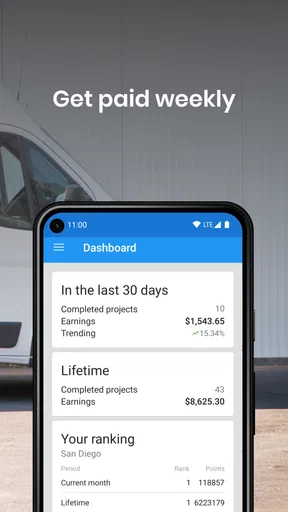
Our Review of GoShare: Drive, Deliver, Earn
 Analysis by Appyee
Turning an ordinary vehicle into a way to earn extra money sounds simple, but the practical question is whether the work fits your vehicle, schedule, and tolerance for uncertainty. That is where GoShare: Drive, Deliver, Earn becomes interesting. It is a free Business app from GoShare Inc. built around driving jobs for people with a pickup truck, cargo van, box truck, SUV, or car. I see it as a tool for testing delivery work without immediately committing to a full-time logistics business.
My first impression is that this is not an app for passive income or effortless cash. You still need to drive, handle real items, plan around traffic, and judge whether a job is worth the time and vehicle wear. The app’s value is in putting potential delivery work in one place, while the real success depends on how carefully you choose assignments and prepare before accepting them.
What to expect before taking your first job
The basic idea is easy to understand: you use your own vehicle to help move or deliver items and receive earnings for the work. That makes the app especially relevant to someone who already owns a suitable vehicle and wants to use unused hours productively. A pickup truck may suit bulky outdoor items, while a cargo van or box truck can make larger loads more practical. An SUV or car may be more comfortable for smaller jobs, depending on the assignment.
That vehicle-first approach is important. I would not install this expecting the same experience as a standard passenger ride app. Your vehicle is not just transportation here; it is part of the service you provide. Before getting excited about a possible job, think about cargo space, loading height, interior protection, fuel use, and whether you are comfortable moving items repeatedly. A vehicle that looks suitable on paper may become inconvenient once a load needs careful handling.
The app has been available since February 11, 2016, and its current version is 2.20.9. It requires Android 6.0 or later, which makes it accessible on many older Android phones, although practical performance will still depend on the phone’s condition and connection. GoShare has reached over one hundred thousand installs and holds a 3.7 average from around one thousand eight hundred ratings, so I would describe it as an established but not universally loved option.
That rating tells me to approach it with realistic expectations. Some drivers will find a useful source of assignments, while others may find that job availability, distance, or vehicle suitability limits the value. The app is free to install and is rated for Everyone, but “free” does not mean the work has no costs. Fuel, maintenance, cleaning, parking, loading time, and unpaid travel all affect what you actually gain.
A useful way to judge each opportunity is to consider the complete trip rather than only the visible delivery distance. Include the drive to the pickup location, time spent waiting or loading, the delivery route, and the return journey if the job leaves you far from home. This is one of the most important habits for a new user because a short-looking assignment can consume much more of your day than expected.
Who is likely to get the most from it
I think GoShare is best suited to people who already have a practical vehicle, can work during flexible periods, and are comfortable with physical logistics. It may suit a small business owner with a van, a truck owner who wants occasional work, or someone exploring local delivery before buying commercial equipment. It can also be useful when your schedule changes from week to week and a fixed shift is inconvenient.
It is less attractive if you need predictable weekly income, dislike lifting or loading, or rely on extremely low operating costs. Someone with a compact car should be especially selective. Even when a car can technically be used, the available work may not match what the vehicle handles comfortably. In that situation, a conventional flexible work app with less emphasis on cargo could be a better fit.
I would also skip it if you are looking for a completely hands-off experience. This is work that follows you outside the screen. You may need to inspect the vehicle, organize straps or protective materials, clear cargo space, and think ahead about parking. The app can help connect the work, but it cannot remove the practical responsibility of completing it well.
Setting up with a useful plan instead of rushing
When I approach an app like this for the first time, I prefer to prepare the physical side before exploring every screen. Clean out the vehicle, check that the cargo area is usable, and keep a simple note of fuel and maintenance costs. That gives you a baseline for judging whether an assignment is genuinely worthwhile rather than merely producing a payment.
It is also worth deciding what kind of work you want to accept. A pickup truck owner may be comfortable with outdoor or irregularly shaped items, while a car owner may prefer smaller loads that do not risk interior damage. If you have a cargo van, protect the floor and walls before the first job. A few minutes of preparation can prevent a damaged interior from turning one delivery into a loss.
During setup, read each instruction carefully instead of tapping through quickly. Pay attention to the vehicle information you enter, the work area you can realistically cover, and any profile or eligibility steps shown in the app. I would keep personal documents and vehicle details ready, but I would only submit information through the official in-app process. This is a work platform, so accuracy matters more than speed at this stage.
A common beginner mistake is to describe availability too broadly. If you mark yourself as ready for locations that are technically reachable but inconvenient, you may spend more time repositioning than working. Start with an area you know well. Familiar roads, parking patterns, and traffic conditions make the first delivery easier to evaluate and reduce avoidable stress.
Before accepting anything, make a small “go or no-go” checklist. I would ask whether the vehicle can handle the load, whether the pickup and drop-off locations are practical, whether the total driving time makes sense, and whether I have enough time for delays. This is more useful than focusing on the headline earning alone. The best first job is not necessarily the largest one; it is the one you can complete calmly and learn from.
Preparing for the first meaningful result
Your first meaningful success should be a completed delivery that leaves you with a clear understanding of the work, not simply a job accepted in the app. Before leaving, confirm that you have enough fuel, a charged phone, and an uncluttered cargo area. A phone mount or hands-free setup can make navigation safer, but never handle the app while driving.
Think about loading before you arrive. Heavy items should not be placed where they can slide into lighter objects, and fragile cargo should not be treated as filler around larger pieces. Even without turning the vehicle into a professional moving truck, a basic loading order helps: heavier items low and stable, delicate items protected, and anything needed first kept accessible.
I would also allow more time than the route estimate suggests. Finding the correct entrance, locating a safe place to stop, and communicating at pickup can take longer than the drive itself. New drivers often underestimate these transitions because they think only in miles. In delivery work, the minutes around the route can determine whether a job feels smooth or exhausting.
Keep your communication simple and professional. If something about the pickup is unclear, resolve it before moving the item. If the location is difficult to access, pause and think through the safest legal stopping option rather than improvising in traffic. A completed job is valuable, but a rushed loading area or unsafe parking decision is not worth saving a few minutes.
A realistic first-day scenario
Imagine I have a pickup truck and a free afternoon. I open GoShare, review an available opportunity, and first compare the pickup location with where I expect to finish the day. The assignment appears manageable, but I do not stop at that first impression. I check whether the truck bed is empty, whether the item size seems appropriate, and whether the total route will leave me too far away for my next responsibility.
After accepting, I leave extra time for traffic and arrive with the bed prepared. At pickup, I inspect the item and decide how it should sit in the truck rather than throwing it in quickly. I secure it, drive carefully, and think about the drop-off before arriving: where can I stop, and how will I move the item from the vehicle to the destination? Once the delivery is complete, I record the fuel used and the total time from departure to finish.
That final note is the part many new users skip. If the job produced an attractive payment but occupied most of the afternoon and required a long empty return trip, I need to know that before accepting similar work again. If it fit naturally into my route and used a vehicle that was already available, the result may be much better. The app supplies the opportunity; your record-keeping reveals whether it suits you.
Confusing parts and trade-offs to understand early
The biggest potential confusion is the difference between an app showing work and an app guaranteeing work. GoShare can be useful for finding delivery opportunities, but your results may vary with location, vehicle type, timing, and demand. I would not build a fixed household budget around it until I had observed my own local pattern over several completed jobs.
Another point is the difference between gross earnings and useful earnings. Fuel is obvious, but vehicle depreciation is easier to ignore because it does not leave your bank account immediately. Repeated loading can also affect tires, suspension, brakes, and the cargo area. If you use a personal vehicle, include those long-term costs in your decision. Otherwise, a busy day can look successful while quietly reducing the value of the vehicle.
Distance can be deceptive as well. A nearby pickup may still involve difficult parking or a slow loading process, while a farther job may fit a route you already planned to drive. I would compare assignments by total time and vehicle effort, not by distance alone. This is a practical advantage of using a simple personal log: after a few jobs, you begin to recognize which situations are profitable for you and which are not.
Vehicle size creates another trade-off. A larger truck or van may open more possibilities, but it can also cost more to operate and be harder to park. A smaller vehicle may be cheaper and easier in dense areas, but it can limit what you can accept. There is no universally best vehicle for this app. The right choice depends on whether your priority is cargo capacity, operating cost, maneuverability, or the ability to combine deliveries with other errands.
I would not compare GoShare only with other delivery platforms. The more relevant alternative may be doing occasional moving or hauling work independently, using local classifieds, or taking a conventional courier role. Independent work can offer more control but usually requires finding customers and arranging the details yourself. A standard courier app may involve less bulky cargo but could provide a different rhythm of assignments. GoShare sits between those options: it is more structured than finding every customer alone, but it still asks you to manage your vehicle and time like a small operator.
Small habits that make the experience better
One useful habit is to group your working hours around your existing movements. If you already need to travel across town, an assignment along that direction may be more attractive than a job requiring a separate long repositioning trip. This does not mean accepting every nearby opportunity; it means reducing empty driving wherever possible.
Another is to keep the cargo area visually simple. When every strap, blanket, box, or tool has a regular place, loading becomes faster and you are less likely to discover that a necessary item was left at home. This matters more with larger vehicles because extra space can encourage careless packing. Organization is not cosmetic here; it directly affects time and cargo protection.
I would also review the outcome immediately after each job. Note the start time, completion time, fuel impression, parking difficulty, loading effort, and whether the destination left you in a useful area. These details help answer questions the app screen cannot answer for you. After several entries, you can create your own acceptance rules, such as avoiding assignments that require an empty return or refusing loads that exceed what you can safely handle alone.
A final advanced tip is to protect your personal schedule. Leave a buffer before an appointment, school pickup, or another commitment. Delivery work has too many small variables to treat an exact arrival time as guaranteed. A job that is profitable in a completely open afternoon may be a poor decision when one delay could disrupt the rest of your day.
Who should install it and what to do next
GoShare is worth trying if you own one of the supported vehicle types, want flexible delivery work, and are prepared to evaluate assignments like a small business owner. The free price lowers the barrier to testing it, and the Everyone age rating makes the app broadly approachable. Still, the real test is not installation; it is whether the work available in your area matches your vehicle and schedule.
For a first attempt, I would start with one manageable assignment rather than filling an entire day. Prepare the vehicle, read the job details carefully, allow extra time, and record the complete effort afterward. That approach gives you a meaningful answer without forcing you to commit too early. If the first result feels promising, refine your preferred areas and vehicle types instead of accepting everything indiscriminately.
People who need guaranteed hours, dislike physical handling, or cannot absorb fuel and maintenance costs should consider another kind of work. Likewise, if your car has limited cargo room, do not stretch it beyond what is safe simply to access more opportunities. A conventional passenger-driving or lightweight courier option may be a better match.
My overall view is positive but practical: GoShare works best when you treat it as a tool for selective delivery work, not as an automatic paycheck. Its strongest point is the chance to turn an appropriate vehicle and spare time into useful assignments. Its weakness is that the app cannot make an unsuitable route, vehicle, or schedule profitable. If you understand that trade-off before starting, the path from installation to your first successful delivery becomes much clearer.
GoShare Inc. has made the concept straightforward enough for a first-time user to explore, and the current Android support helps people with older devices get started. I would install it, prepare the vehicle first, and judge it through careful real-world results. That is the fairest way to discover whether this particular Business app belongs in your weekly routine.
Verdict
Strengths of GoShare: Drive, Deliver, Earn
- Flexible earning options for drivers and couriers
- Simple booking process for requesting vehicles or deliveries
- Useful tracking features help monitor active trips
- Available vehicle choices can suit different travel needs
- Cashless payments make transactions quick and convenient
Limitations of GoShare: Drive, Deliver, Earn
- Service availability may be limited outside supported cities
- Earnings can vary significantly with demand and location
- Drivers may need to meet specific eligibility requirements
- Delivery and pickup times can change during busy periods
- App performance may depend on a stable internet connection
Similar Picks in This Category
View All
LinkedIn: Community & Network
LinkedIn3.8

Zoom Workplace
zoom.com4.1

Microsoft Teams
Microsoft Corporation4.6

Meta Business Suite
Meta Platforms, Inc.4.6

Webex Meetings
Cisco Systems, Inc.4.5

TeamViewer Remote Control
TeamViewer4.4
Frequently Asked Questions
What is GoShare: Drive, Deliver, Earn, and how does it work?
GoShare is a logistics and delivery platform that connects customers who need items moved or delivered with independent drivers who use their own vehicles. Depending on your location, you may request help transporting furniture, appliances, packages, or other large items, or sign up to earn money by completing delivery and moving jobs. Available services, vehicle requirements, and job types can vary by market.
Can anyone become a GoShare driver, and what are the requirements?
GoShare driver eligibility depends on local regulations and the type of vehicle you operate. Applicants generally need a valid driver’s license, an eligible vehicle, proof of insurance, a clean or acceptable driving record, and the ability to pass identity and background checks. Some jobs may require a pickup truck, cargo van, or box truck, while others may have additional equipment or experience requirements.
How much money can drivers earn with GoShare?
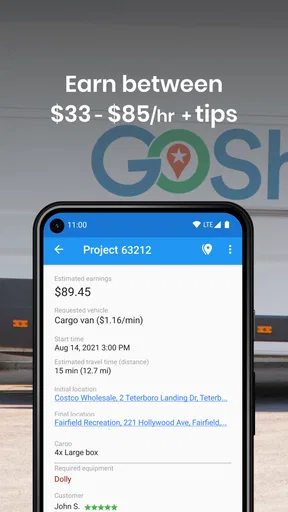
Driver earnings are not fixed and can change according to location, vehicle type, distance, job size, demand, and the amount of time required. The app normally provides job details and estimated compensation before you accept an assignment, allowing you to decide whether it is worthwhile. Keep in mind that fuel, maintenance, insurance, taxes, and other operating expenses reduce your actual take-home income.
What types of deliveries or moving services can customers request?
GoShare is designed for more than standard small-package delivery. Depending on the service area, customers may request transportation for furniture, appliances, building materials, boxes, retail purchases, and other bulky items. Some bookings can include loading and unloading assistance, while others may only involve transportation. Before booking, review the vehicle and helper options carefully to ensure they match your item’s size, weight, and handling needs.
Is GoShare available everywhere, and are there any extra fees to know about?
GoShare availability is limited to supported cities and surrounding service areas, so you should enter your location in the app before relying on it for a delivery or moving request. The final price may depend on distance, vehicle category, labor, timing, item requirements, and other service details. Review the estimate, cancellation rules, waiting charges, and any additional fees shown before confirming your booking.
